SEO by the Sea – His Famous Blog
A Resource for SEO Knowledge
Bill Slawski’s blog, SEO by the Sea, was a key source of insight for anyone seeking to understand the complex workings of search engines. Through this blog, Bill meticulously broke down Google patents, offering in-depth analyses of how search algorithms evolve and how SEOs can adapt. He made complex technical subjects accessible to both SEO novices and experts alike.
Through SEO by the Sea, Bill didn’t just offer updates on algorithm changes; he provided clear interpretations of patent filings, dissecting them to reveal how Google may rank or interpret content. This approach allowed SEOs to be more proactive and informed in their strategies, rather than reacting to updates.
Bill’s ability to predict SEO trends based on patent analysis was one of the key reasons his blog gained such a devoted following. He didn’t just discuss what had changed in SEO; he provided a window into what could happen in the future, based on the patents Google was filing. This forward-thinking approach helped SEOs prepare for shifts before they became widespread, giving them a competitive edge. By decoding Google’s patents, Bill gave his readers the tools to anticipate the direction of search engine algorithms and implement strategies that aligned with Google’s evolving focus on user intent and semantic search.
Patent Analysis & Algorithm Insights
Decoding Google’s Search Algorithms
One of Bill’s most important contributions was his ability to analyze and decode Google’s patents. He broke down complex technical patents into understandable terms, explaining how these patents influenced search algorithms, ranking factors, and how Google interprets and processes information.
Bill’s deep dive into patents like RankBrain, BERT, and Universal Search gave SEO professionals a behind-the-scenes look at how Google is evolving its algorithms and understanding of user intent. By studying these patents, Bill provided insights that helped shape modern SEO strategies.
Bill’s expertise in dissecting patents allowed him to identify key algorithm changes and connect the dots between Google’s technical innovations and their real-world impact on SEO strategies. For example, his analysis of the RankBrain patent unveiled Google’s move toward machine learning to improve search results, which had far-reaching implications for how SEO professionals approach content optimization. By breaking down the BERT patent, Bill illuminated how Google began to prioritize contextual relevance and natural language processing over simple keyword matching. This type of insight was invaluable for SEOs who were trying to keep up with Google’s rapid technological advancements. Bill’s work didn’t just explain what Google was doing; it forecasted how it would affect search rankings, enabling SEOs to adapt and stay ahead of algorithm updates.
Semantic Search & User Intent
Shifting Focus Toward Context and Relevance
Bill was an early advocate of semantic search — the idea that search engines need to understand not just keywords, but the context and intent behind a search query. His work on semantic search influenced how SEOs approach content creation today. Instead of simply optimizing for keywords, Bill championed the importance of crafting content that meets user intent and answers search queries in a meaningful way.
This perspective was pivotal as search engines, particularly Google, began to shift from simple keyword matching to understanding natural language and context. Bill’s insights into user intent helped SEOs realize that ranking well isn’t just about targeting the right keywords; it’s about aligning content with the questions and needs users have.
Bill’s emphasis on semantic search fundamentally changed the way SEOs approach optimization. He argued that keywords alone were no longer enough to rank well; understanding the context and intent behind a query was essential. Bill was ahead of his time in advocating for the importance of creating content that not only matched keywords but also provided meaningful answers to users’ queries. His work underscored that SEO success is not simply about fitting content with exact keyword phrases but about aligning it with what the user truly seeks — their underlying intent.
Ethical SEO & Transparency
Advocating for Integrity in SEO
Bill Slawski was a strong advocate for ethical SEO practices. He consistently emphasized the importance of creating value for users and building websites that genuinely served their needs. Bill was vocal about white-hat techniques, steering clear of manipulative tactics like keyword stuffing, link farming, and other black-hat SEO methods.
He encouraged SEOs to adopt long-term strategies that focused on quality content, user experience, and search engine transparency. Bill’s ethical stance on SEO helped shift the industry toward practices that prioritize sustainable growth over quick wins or shortcuts.
Bill’s advocacy for ethical SEO went beyond just promoting best practices; he firmly believed that the long-term success of any website or business depended on building trust with both users and search engines. He recognized that while black-hat techniques might offer short-term gains, they would ultimately lead to penalties, damaged reputations, and a lack of sustainable growth. Bill was a champion for transparency in SEO, urging practitioners to focus on delivering value to users rather than exploiting algorithmic weaknesses. His teachings encouraged SEOs to create authentic content, engage with their audiences honestly, and build websites that not only ranked well but also provided a meaningful experience for visitors. Bill’s commitment to integrity helped lay the foundation for a more responsible SEO industry, where the focus shifted from quick hacks to long-term strategies that benefit both the users and the wider web ecosystem.
Strategic Contributions to SEO Practices
Shaping Modern SEO Strategies
Bill’s research didn’t just impact theoretical knowledge about SEO — it had a profound effect on practical SEO strategies. His work on Google’s Universal Search and internal linking strategies helped shape the best practices for site architecture and content organization. Bill often emphasized the importance of relevant content, site usability, and clear navigation to improve rankings.
He also advocated for content diversity, urging SEOs to optimize different types of content, such as videos, images, and local results, to meet the needs of a varied audience. His strategic insights helped shape the multi-faceted approach to SEO we use today.
Bill’s influence extended beyond the theoretical aspects of SEO, providing practical, actionable strategies that became foundational to modern SEO practices. He understood that SEO wasn’t just about ranking for specific keywords but about creating a comprehensive user experience. His advocacy for internal linking strategies and clear site navigation helped establish the importance of creating well-structured websites that both users and search engines could easily navigate. Bill recognized that user-friendly sites with well-organized content not only helped with SEO rankings but also increased engagement and conversion rates. His work highlighted that SEO success comes from building holistic digital experiences, where each element, from content to technical setup, works together to provide maximum value to users. This approach has become standard practice for SEOs today, particularly in how we create content strategies that address a wide range of media formats, including video, images, and even local search optimization.
Mentorship & Community Engagement
Guiding the Next Generation of SEOs
Beyond his technical expertise, Bill Slawski was a mentor to countless SEO professionals. He shared his knowledge freely, contributing to SEO forums and attending conferences to engage directly with the SEO community. Bill was known for his generosity in helping others, taking the time to explain complex topics to those who sought his guidance.
His active participation in SEO communities allowed him to shape and influence the thinking of new and experienced professionals alike. Bill’s willingness to share his knowledge and support others is one of the reasons why his legacy continues to live on.
Bill’s mentorship went beyond just answering questions; he believed in empowering others with the tools and knowledge to think critically about SEO. He often encouraged newcomers to explore SEO from a scientific perspective, emphasizing the importance of data-driven decision-making and experimenting to understand what truly works. Bill’s approach to mentorship was rooted in encouraging independence—rather than simply providing answers, he helped others find their own solutions. This philosophy fostered a sense of curiosity and problem-solving mindset within the SEO community, making Bill’s contributions not just educational but also inspirational. By leading through example and sharing his insights, Bill cultivated a sense of community and collaboration, where SEO professionals could learn from one another and grow together. His legacy of mentorship and support lives on in the countless SEOs he helped along the way.
Speaking Engagements and Conference Influence
Inspiring SEOs Around the World
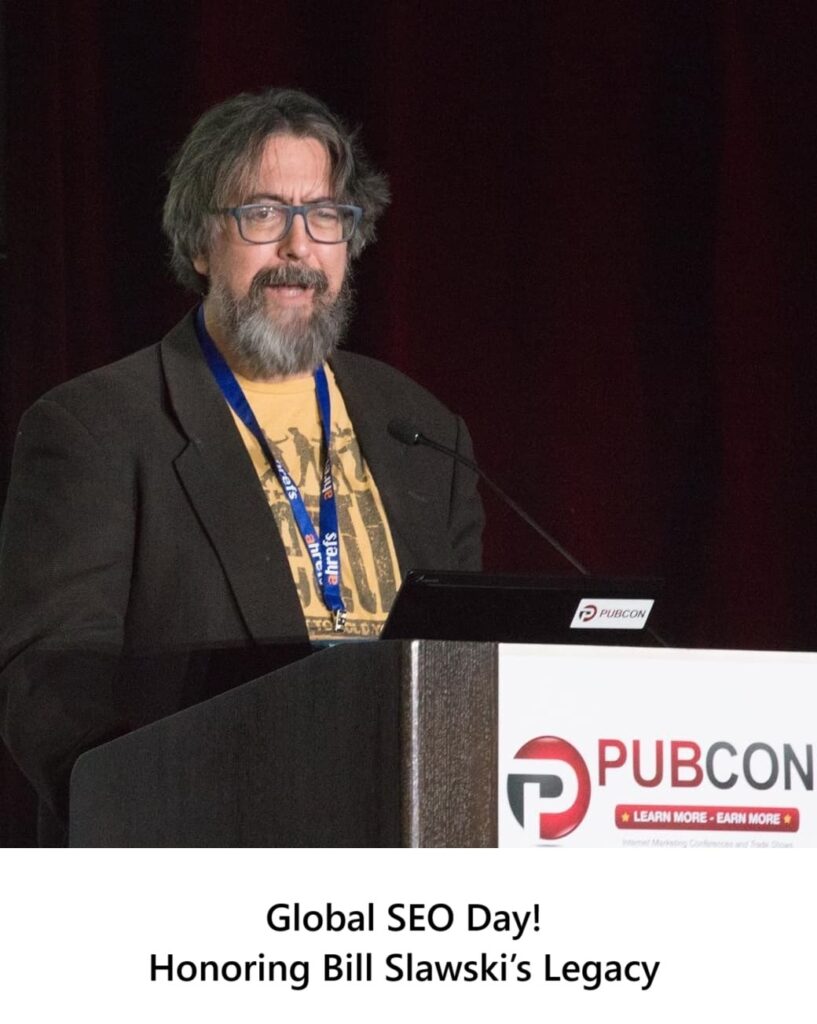
Bill Slawski was a regular presence at SEO conferences, where he shared his research and insights with professionals from around the globe. His talks often focused on patent analysis, user intent, and semantic search, which had a lasting impact on the way SEO professionals approached their work.
At conferences like MozCon, Pubcon, and SMX, Bill didn’t just speak about the latest developments in SEO — he challenged the industry to think critically about the future of search and how SEOs should adapt. His presentations were always well-received for their clarity, depth, and actionable advice.
Bill’s ability to engage audiences and provide actionable insights made his conference appearances unforgettable. He didn’t just present theories; he offered practical strategies that attendees could apply immediately to improve their SEO work. His talks often featured real-world examples of how algorithms work and how SEOs could adapt to upcoming changes, preparing them for the future of search. Bill’s presentations weren’t just educational—they were also thought-provoking, encouraging SEOs to question the status quo and explore innovative ways to approach search optimization. Beyond the sessions, Bill was known for his approachability and willingness to collaborate with others in the industry, making him a respected figure at networking events and informal gatherings. His influence at these conferences was not just limited to the sessions themselves but also in the lasting relationships and shared knowledge that continued long after the events ended.
Posthumous Influence and Recognition
Bill’s Legacy Lives On
Though Bill Slawski passed away in 2022, his work continues to influence SEO professionals and educators today. His blog posts, research articles, and conference presentations remain invaluable resources for SEOs seeking to understand search engine algorithms.
Bill’s contributions have been widely recognized within the industry. His analysis of Google’s patents and algorithms remains a crucial part of SEO research, and his work has been referenced by industry leaders and SEO platforms such as Moz, Search Engine Journal, and Search Engine Land. Bill’s legacy continues to shape the current landscape of SEO, and his influence will be felt for years to come.
Bill’s impact is not confined to his lifetime; it lives on through the many SEOs he mentored, inspired, and educated. His research continues to serve as the foundation for much of modern SEO strategy, especially in understanding the complexities of Google’s algorithm updates. New generations of SEO professionals regularly refer to his writings and patent analyses, ensuring that his work remains relevant in an ever-evolving field. Bill’s legacy is also seen in the ethical SEO practices that have become standard today, as his emphasis on creating value for users and long-term growth has shaped the industry’s focus away from manipulative techniques. As the SEO landscape continues to change, Bill’s contributions will remain a cornerstone of the field, reminding us all of the importance of integrity, education, and innovation in SEO.