- Why Do Generic Descriptions Fail on Craft Products?
- What Should Every Handmade Description Contain?
- How Do You Write About Variation Without Losing the Sale?
- How Do You Justify a Handmade Price?
- Should Descriptions Be Written for Search or for Buyers?
- How Do You Write for Gift Buyers and Enthusiasts at Once?
- What Should a Handmade Product Title Contain?
- Last Thoughts on Handmade Product Descriptions
- Frequently Asked Questions
A handmade product page has to sell an object the buyer cannot hold, that will not look exactly like the photograph, and that costs more than the machine-made equivalent sitting one result above it in search.
Every one of those problems is also an opportunity, because answering them produces text that no competitor has and that no supplier feed could generate. This article covers what to write and why each part earns its place.
Why Do Generic Descriptions Fail on Craft Products?
A short, poetic description tells a search engine nothing and leaves a buyer’s questions unanswered. Craft stores lean toward atmosphere over specifics more than any other retail category.
The two failure modes:
- Atmosphere only: evocative language with no material, dimension or care information. Nothing to rank for and nothing to decide on
- Supplier text: identical to every other retailer carrying the piece, which for genuinely handmade work is both damaging and unnecessary

What Should Every Handmade Description Contain?
Six elements, in roughly this order, cover both the search need and the buying decision.
Material and technique
Dimensions and weight
Variation
Care and durability
Packaging and delivery
Maker and origin
How Do You Write About Variation Without Losing the Sale?
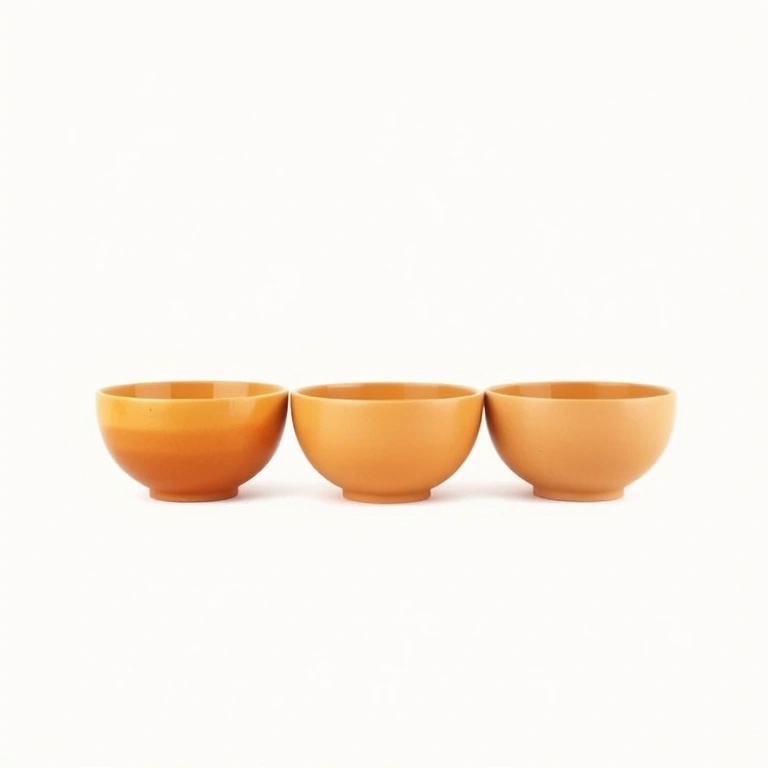
Describe the variation specifically and frame it as the consequence of being handmade, rather than apologising for it or hiding it.
Vague reassurance makes buyers more nervous, not less. Telling someone a piece may vary slightly invites them to imagine the worst. Telling them exactly what varies removes the uncertainty.
What to state:
- What changes: colour depth, glaze pooling, grain, weave tension, minor dimensional differences
- Why it changes: kiln position, firing temperature, natural material, hand-forming
- The range, expressed concretely rather than as a disclaimer
- What never varies, which is equally reassuring and rarely mentioned
How Do You Justify a Handmade Price?
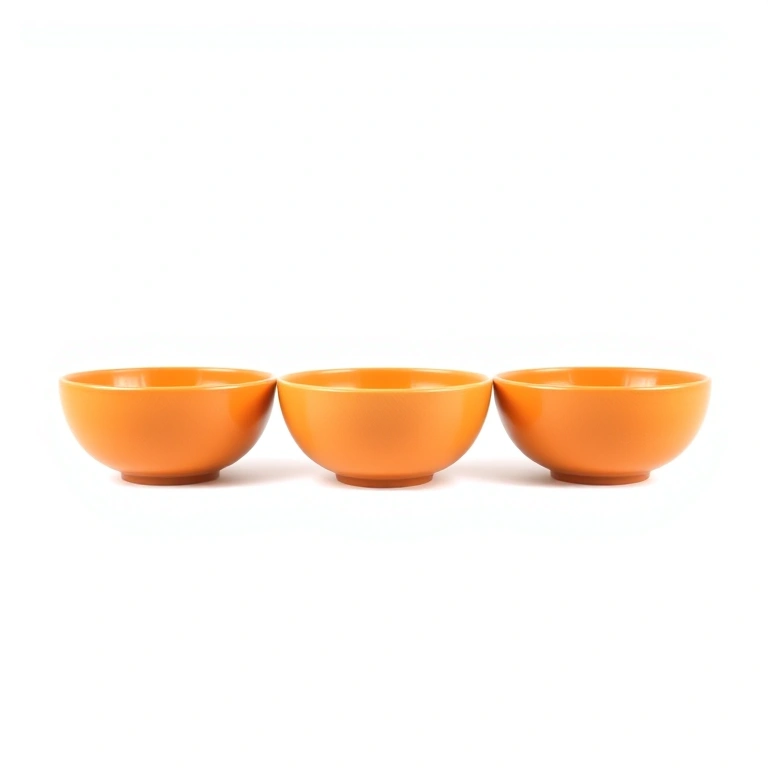
Justify price with specifics about labour, material and longevity rather than with adjectives. A buyer comparing a handmade piece against a mass-produced one is doing arithmetic, and the page has to give them the inputs.
What actually moves that decision:
- The time the piece takes to make, stated plainly
- The material grade and where it comes from
- The number of stages or firings involved
- Expected lifespan compared to the mass-produced alternative
- Who is paid, where a fair-trade or workshop story is genuine
None of that is marketing language. It is information, and it ranks as well as it sells.
Should Descriptions Be Written for Search or for Buyers?
For buyers, using the words buyers actually use, which is what search engines reward anyway. The conflict between the two is mostly imaginary and disappears once the page is specific.
Where the tension is real is the naming problem. The accurate name for a craft is often not the term buyers type. Handle it by using both: the correct term for accuracy and authority, and the searched term where it fits naturally.
How to rank handmade products covers the keyword side in more detail.
How Do You Write for Gift Buyers and Enthusiasts at Once?
Write the specifics for the enthusiast and the context for the gift buyer, in that order, on the same page. They share a product and share almost no vocabulary.
The enthusiast wants material, technique, origin and dimensions. The gift buyer wants to know whether it suits the person, the occasion and the budget, and often knows nothing about the craft at all.
How to serve both without writing two pages:
- Lead with what it is, in plain language a newcomer understands
- Follow with the specifics, which the enthusiast scans for and the gift buyer skips harmlessly
- Add a suitability line: who it suits, what occasion, what it pairs with
- Answer gifting logistics, since packaging and presentation decide gift purchases and are almost never mentioned
- Use collections to separate them, so gift-intent searches land on gift-framed pages rather than on a technique page
What Should a Handmade Product Title Contain?
The product name, the material or craft, and the defining attribute, in the order buyers would say them. Titles are doing identifier work on handmade goods, because there is no model number to carry it.
What belongs and what does not:
- Include the item, the material or technique, and a distinguishing attribute such as size, colour family or set quantity
- Include the craft name where it carries search volume in its own right
- Exclude marketing adjectives, which occupy space and rank for nothing
- Exclude internal codes that mean nothing to a buyer
- Keep it consistent with the feed, since the title is also doing work in Merchant Center where no identifier exists
Last Thoughts on Handmade Product Descriptions
The description is where a craft store wins or loses against a marketplace, because it is the one thing a platform cannot replicate.
Prioritise by revenue rather than working alphabetically through the catalogue. Rewrite the pieces that can move the numbers first, cover material, technique, dimensions, variation, care, packaging and origin, and let customer photography carry the rest. The handmade and craft store SEO service includes this work, and product page SEO that converts covers the general mechanics.
Key Takeaways
- Atmospheric descriptions give search engines nothing to rank and buyers nothing to decide on.
- Cover material, technique, dimensions, variation, care, packaging and origin on every page worth the effort.
- Describe variation specifically. Vague reassurance makes buyers imagine the worst.
- Justify price with labour, material and longevity rather than adjectives.
- Customer photography communicates real variation better than any description and adds unique content.
- Prioritise rewrites by revenue, not alphabetically through the catalogue.
Frequently Asked Questions (FAQs)
How long should a handmade product description be?
Long enough to cover material, technique, dimensions, variation, care and packaging. That is usually longer than makers expect and shorter than an article.
Should I mention that pieces vary?
Yes, and specifically. State what changes, why it changes and what never changes. Vague reassurance increases hesitation rather than reducing it.
How do I justify a higher price than mass-produced items?
With specifics: time to make, material grade, number of production stages and expected lifespan. Information persuades where adjectives do not.
Can I reuse my Etsy listing text on my own site?
Better not to. Duplicate text across both weakens your own page rather than the marketplace listing, which wins on domain strength.
Do customer photos help SEO?
Yes. They add unique content to an otherwise templated page and resolve the variation objection more convincingly than description alone.
Want More Sales From Search?
Get a free, no-obligation store audit and a clear plan to grow your revenue.