- What is Handmade and Craft SEO?
- How Do Craft Buyers Actually Search?
- Why Does Etsy Outrank Your Own Shop?
- What Makes a Handmade Product Page Rank?
- How Should Craft Collections Be Structured?
- What Technical Work Gets a Craft Catalogue Indexed?
- Last Thoughts on Ranking Handmade Products
- Frequently Asked Questions
Handmade sellers have a content advantage no other retail category can match, and almost none of them use it. Every competitor selling mass-produced goods has to invent something to write about. A maker has a real story: how the thing is made, who makes it, where the tradition comes from and why it looks the way it does.
Left on an About page, that story earns nothing. Built into the site architecture, it becomes the reason a search engine prefers your page over a marketplace listing selling the identical item at a lower price.
This article covers how to turn craft into rankings, in the order the work should be done.
What is Handmade and Craft SEO?
Handmade and craft SEO is the practice of making a maker’s own product and collection pages the result a buyer chooses, instead of the marketplace listing selling the same piece. Three conditions make it different from general e-commerce SEO.
Stock that does not repeat
Variation between pieces
A real story
How Do Craft Buyers Actually Search?
Craft buyers search descriptively, by technique, material, origin and use, rather than by product category alone. Those searches are lower in volume and far higher in intent than anything a marketplace competes for.
The recurring query patterns:
- Technique and craft name, such as the specific glazing, weaving or forming method
- Material, which buyers often care about more than form
- Origin and tradition, where the regional name of a craft carries real search volume
- Use and room, since many buyers start from where the item will go
- Occasion and recipient, which carries most of the seasonal gift volume
- Handmade as a qualifier, used by buyers deliberately avoiding mass-produced results

Why Does Etsy Outrank Your Own Shop?
Etsy outranks independent makers on domain strength, not on relevance, and that is the whole basis of the strategy. Domain strength cannot be matched. Relevance can be beaten.
The scale is worth understanding honestly. Etsy reported roughly 86.5 million active buyers and 5.6 million active sellers at the end of 2025, and around 82 percent of those sellers run their shop alone. Competition inside the platform rose again as seller numbers returned to growth.
A marketplace listing describes your work in a form field. Your own page can explain the technique, the firing or finishing process, the material source, the dimensions, the care instructions and honestly why pieces vary. Search engines can evaluate that difference, and so can a buyer comparing two results.
What Makes a Handmade Product Page Rank?
A handmade product page ranks when it answers what a buyer cannot check for themselves: what it is made of, how it was made, what it will actually look like, and what happens if it breaks in transit.
The elements that decide it:
- Original description covering material, technique, dimensions, weight, care and finish
- Variation stated openly, describing what changes between pieces and why, which builds trust and adds text no competitor has
- Real photography with descriptive filenames and alt text, compressed without losing the surface detail buyers zoom in to inspect
- Shipping and packaging answered on the page, because fragility is the single most common objection in craft categories
- Provenance, naming the maker, the workshop or the region where that is the point of the product
Product page SEO that converts covers the general mechanics.
How Should Craft Collections Be Structured?
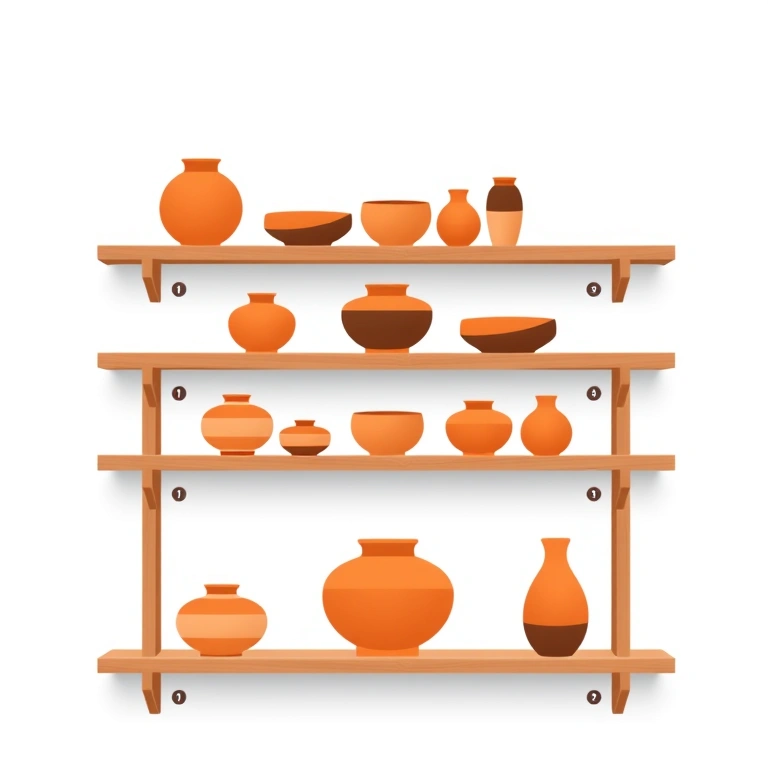
Collections should follow how buyers shop, which is by use, occasion, technique and material, not by how a supplier or a kiln schedule organises stock.
Collection pages carry the highest ranking potential on any store and are almost always the most neglected. A heading above a product grid gives a search engine nothing to evaluate.
Structure worth building:
- Use collections, grouping by the room, the table or the purpose
- Occasion collections, built and indexed months before the season they serve
- Technique collections, which capture the enthusiast searches
- Material collections, often the highest-intent of all
- Price-band collections for gift buyers working to a budget
Category page SEO for online stores sets out the approach in full.

What Technical Work Gets a Craft Catalogue Indexed?
Crawl control comes first, and on craft stores image weight is the second problem. Photography is doing the selling, so it cannot be stripped out; the fix has to be technical rather than editorial.
The working sequence:
- Crawl the store and compare the true crawlable URL count against the real catalogue size
- Set a rule per facet: index it, canonicalise it, or block it
- Serve images in modern formats at the displayed size, preserving the detail that matters
- Audit third-party scripts, which are usually the real cause of a slow craft store
- Confirm afterwards that crawl attention moved toward pages that can take an order
Last Thoughts on Ranking Handmade Products
Craft stores lose to marketplaces on authority and beat them on specificity. Everything above follows from that, and none of it requires outspending anyone.
The order matters. Fix crawl and image delivery first so the catalogue can be reached. Build collections next, because they capture the recurring demand. Deepen product pages last, using the craft story that no competitor can copy.
On HMB Pottery, a handmade Multani blue pottery brand, this approach moved Search Console impressions from 428K to 640K year on year and average position from 9.8 to 6.2. The handmade and craft store SEO service covers the full sequence.
Key Takeaways
- Craft buyers search by technique, material, origin and use, not by generic product category.
- The correct name for a craft is often not what buyers type. Reconciling the two is usually the largest win available.
- Etsy beats you on domain strength, never on relevance. Depth on your own pages is the winnable ground.
- State variation between pieces openly. It is the main buyer objection and the easiest unique content you have.
- Collection pages carry the most ranking potential and are usually a heading above a grid.
- Fix crawl and image delivery before writing anything, because content on an uncrawlable store returns nothing.
Frequently Asked Questions (FAQs)
How do I rank a handmade product against Etsy?
Target specific technique, material and origin searches rather than broad category terms, and publish depth a marketplace form field cannot hold.
Should I stop selling on Etsy if I build my own SEO?
No. Keep both. The aim is that the marketplace stops being the only route to you, not that you abandon working distribution.
What should a handmade product description include?
Material, technique, dimensions, weight, care, finish, and an honest explanation of how pieces vary from one another.
Do collection pages matter for a small craft catalogue?
Yes. Most buyers search for a kind of item before a specific one, so collections capture demand individual product pages never see.
Why are my craft products not appearing in Google?
Usually crawl budget or image weight rather than content. Compare indexed pages against your real product count before writing anything new.
Want More Sales From Search?
Get a free, no-obligation store audit and a clear plan to grow your revenue.


5 Comments